Traditional Weaving
Handloom Textiles & Fabric Art
Overview
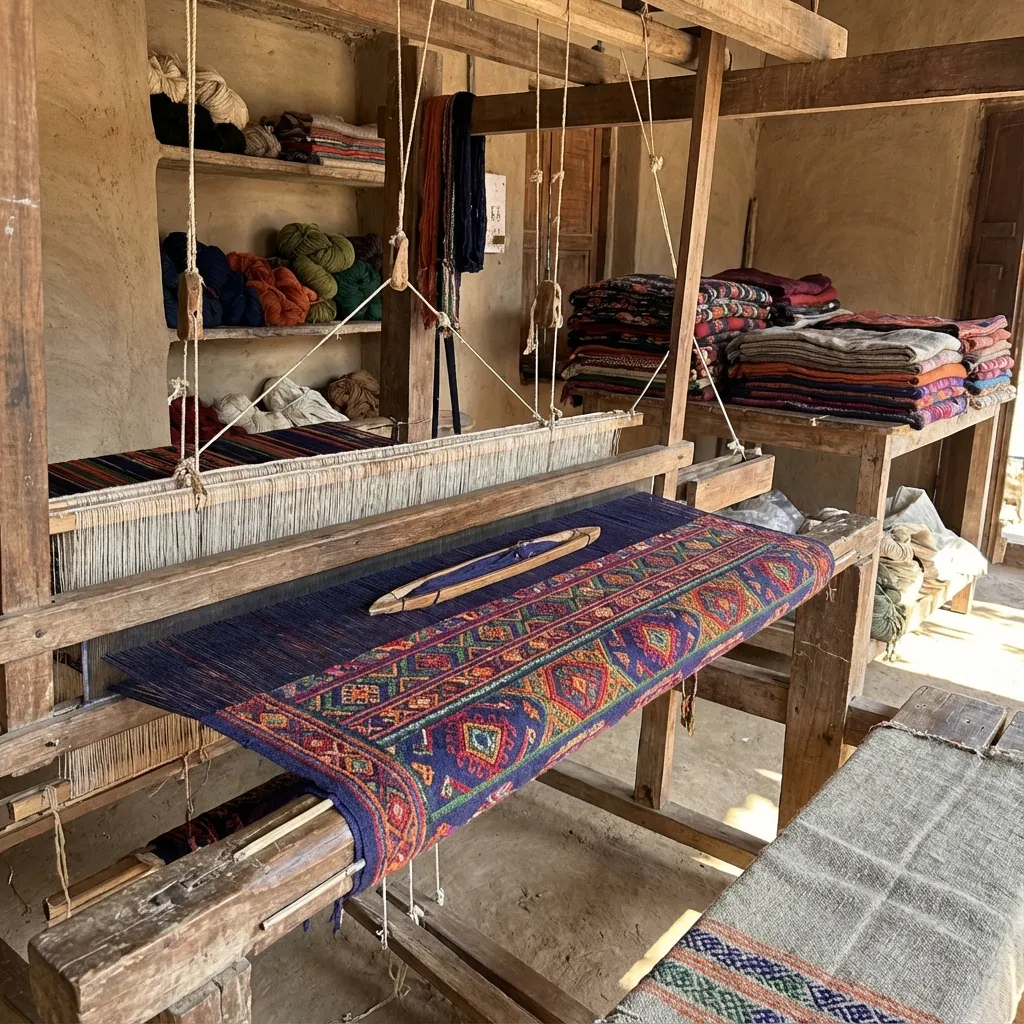
Weaving is one of Kutch's most important textile traditions, practiced by communities like the Vankar, Marwada Meghwal, and others. Using traditional pit looms and frame looms, weavers create an incredible variety of fabrics - from fine cotton and silk to coarse wool. Kutch weaving is characterized by extra-weft patterns, vibrant colors, and distinctive regional styles that have been perfected over centuries.
Heritage
Weaving in Kutch has ancient roots, with archaeological evidence suggesting the craft existed thousands of years ago. Different communities brought their unique weaving traditions - some from Sindh (now Pakistan), others from Rajasthan and other parts of Gujarat. Bhujodi village became famous for its weavers, and today it's a thriving center for handloom textiles. The 2001 earthquake severely impacted weavers, but community resilience and cooperative efforts helped revival.
Types of Looms
Kutch weavers primarily use two types of looms. The pit loom (traditional and most common) has the weaver sitting with legs in a pit, operating pedals to create the shed for weaving. The frame loom stands above ground and is used for certain types of fabrics. Both are entirely manual, requiring skill and rhythm. The rhythmic sound of the shuttle passing through the loom and the beating of the beater is music to those who appreciate handloom textiles.
Traditional Weaving Styles
- Mashroo - Silk and cotton blend with satin-like finish
- Tangaliya - Extra-weft technique creating dots pattern
- Dhabla - Warm shawls traditionally worn by shepherds
- Khadi - Hand-spun and hand-woven cotton fabric
- Patthar Bhaat - Extra-weft patterns resembling pebbles
- Kala Cotton weaving - Indigenous organic cotton
- Wool weaving - For blankets, shawls, and rugs
Mashroo - Silk-Cotton Blend
Mashroo (meaning 'permitted' in Arabic) is a unique fabric developed for Islamic communities who weren't allowed to wear pure silk next to skin. The fabric is woven with silk warp and cotton weft, creating a silk-like sheen on one side while remaining cotton on the reverse. Traditional mashroo features vibrant stripes and is used for traditional garments. This complex weaving technique is now rare and highly valued.
Tangaliya Shawls
Tangaliya is a spectacular extra-weft weaving technique where colored threads are wrapped around warp threads to create a dotted pattern. Each dot is individually made by hand during the weaving process, making it extremely time-consuming. Traditional Tangaliya shawls feature geometric patterns in contrasting colors. A single shawl can take weeks to complete and is considered a masterpiece of weaving artistry.
The Weaving Process
- Preparing yarn - spinning, dyeing, and winding
- Warping - arranging vertical threads on the loom
- Denting - threading warp through the reed
- Drafting - setting up the pattern through heddles
- Weaving - interlacing weft threads through warp
- Pattern creation - adding extra-weft designs
- Finishing - washing, starching, and ironing
Natural Dyes & Colors
Traditional weavers use natural dyes extracted from plants, minerals, and other natural sources. Indigo creates blue shades, madder root gives reds and pinks, pomegranate rind produces yellows, and iron creates blacks. The dyeing process is an art in itself, with recipes passed through generations. Natural dyes create softer, more organic colors compared to synthetic dyes and are eco-friendly and skin-safe.
Kala Cotton - Black Gold
Kala Cotton is an indigenous cotton variety grown organically in Kutch's arid lands. It's naturally resistant to pests and requires minimal water, making it perfectly suited to Kutch's climate. The cotton is brown-colored and has a beautiful, earthy texture. Fabrics woven from Kala Cotton are durable, breathable, and sustainable. This revival of indigenous cotton supports both traditional agriculture and weaving.
Bhujodi - The Weaving Village
Bhujodi village, just outside Bhuj, has become synonymous with quality handloom textiles. Nearly every household here has at least one loom, and the village echoes with the rhythm of weaving. The Vankar community has created a thriving textile center here, with cooperatives and individual workshops. Visitors can see weavers at work, understand the entire process, and purchase directly from artisans.
Contemporary Adaptations
Modern weavers are innovating while respecting tradition. They create contemporary designs - fusion wear combining traditional weaves with modern silhouettes, home décor items like cushion covers and table runners, and fashion accessories like scarves and stoles. Some collaborate with designers to create collections for urban and international markets. Despite modernization, the commitment to handloom quality remains unchanged.
How to Identify Quality Handloom
- Look for slight irregularities - sign of handweaving
- Check the selvage (edge) - should be clean and tight
- Feel the fabric - handloom has a unique texture and weight
- Look for extra-weft patterns on the surface
- Colors from natural dyes have organic variations
- The weave should be even and consistent
- Ask about thread count and material composition
Buying Tips
- Visit Bhujodi village for the widest selection
- Buy directly from weavers when possible
- Ask about the weaving technique and materials used
- Check if dyes are natural or synthetic
- Support cooperatives that ensure fair wages
- Custom orders are possible for specific colors/patterns
- Expect to pay premium prices for extra-weft work
- Request washing and care instructions
Care Instructions
Hand wash handloom fabrics in cold water with mild detergent, especially for the first few washes. Avoid wringing - gently squeeze out water. Dry in shade to preserve colors. Iron while slightly damp for best results. Fabrics with natural dyes may fade slightly over time, which adds to their character. Store in breathable cotton bags to prevent moisture damage.
Price Range
₹500 - ₹15,000 depending on technique, material, and complexity. Simple cotton stoles (₹500-1,200), wool shawls (₹1,500-4,000), Tangaliya shawls (₹3,000-8,000), Mashroo fabric (₹2,000-6,000 per meter), custom woven pieces (₹5,000-15,000), silk-blend items (premium pricing).
Did You Know?
A complex Tangaliya shawl can take up to a month to weave
Traditional pit looms are completely manual - no electricity needed
One meter of fabric requires thousands of individual thread passes
Kala Cotton plants grow naturally without irrigation in Kutch
Mashroo weaving technique is now practiced by only a handful of artisans
Natural indigo dyeing process can take several days
Some weaving families have been practicing for 20+ generations
Kutch handlooms produce over 50 different types of fabrics
Gallery
Designed with ❤️ for travelers seeking authentic Kutch