Photo Courtesy: Niraj Rachh
Heritage City
Kalo DungarHighest Peak in Kutch
Explore Kalo Dungar, one of the remarkable destinations in Kutch, Gujarat.

Overview
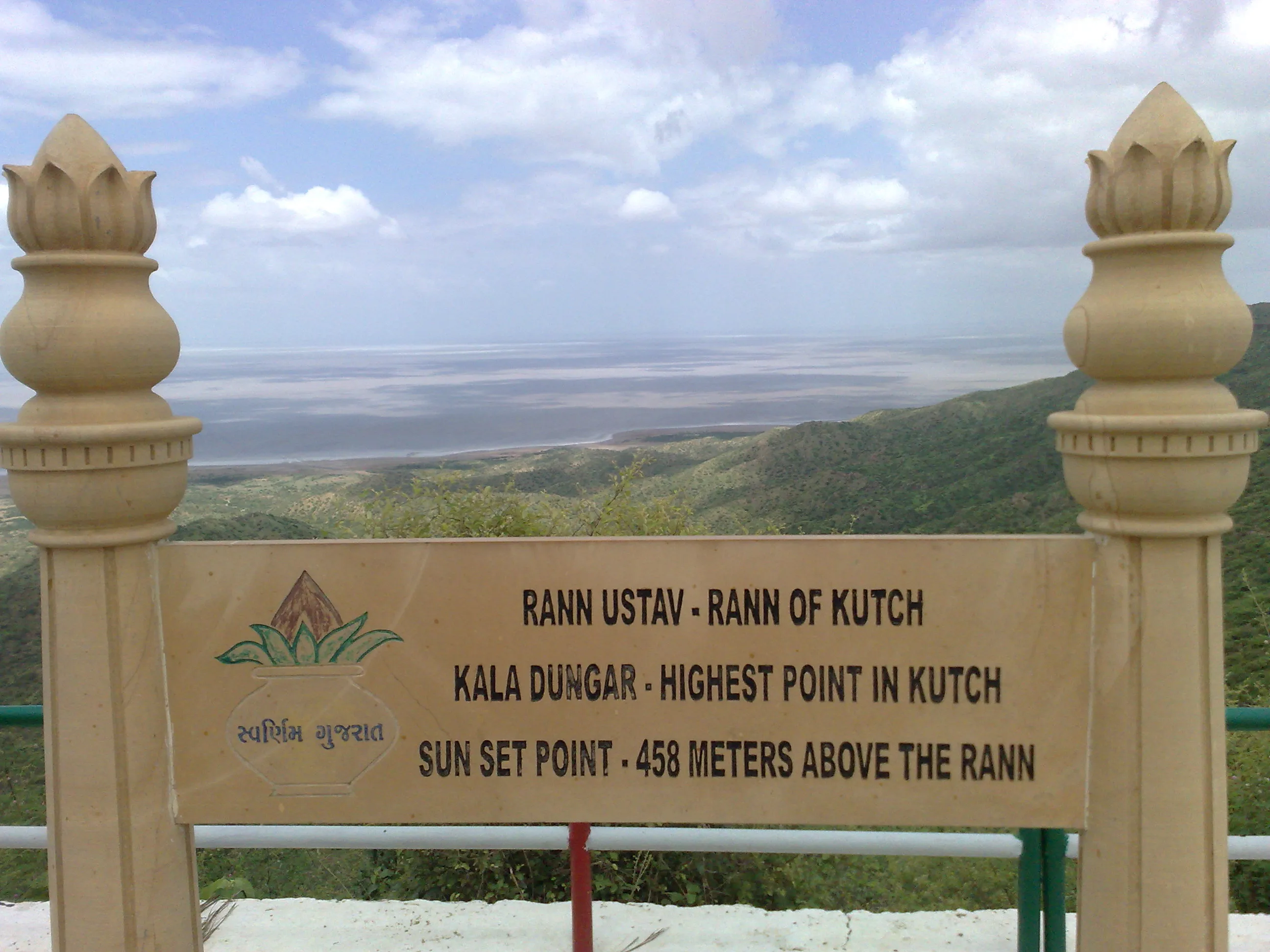
Rising 462 meters above the salt-white plains, Kalo Dungar (Black Hill) is the highest point in Kutch. It offers the only place where you can see the panoramic view of the Great Rann of Kutch. It is also famous for the 400-year-old Dattatreya Temple where priests feed wild jackals every evening—a phenomenon where these shy animals respond to the beating of a plate. The hill is a border area, and from the top, you are looking towards the edge of India.
Who Should Visit
Landscape Photographers For the best panoramic shots of the White Rann.
Wildlife Lovers To witness the unique jackal feeding ritual at sunset.
Families A fun drive with the curious 'Magnetic Hill' experience en route.
Sunset Chasers The sunsets here are legendary.
How to Reach
From Bhuj 97km | 2.5 Hours. The road passes via Khavda.
From Dhordo (White Rann) 48km | 1 Hour. Perfect day trip from the Tent City.
Permit You need to carry a valid ID Proof (Aadhar/Voter ID) as there is an Army Checkpoint.
Transport best reached by private taxi or car. No direct public buses to the hilltop.
Top Things to Do
Dattatreya Temple & Jackal Feeding (Sunset/Afternoon) Offer prayers and wait for the evening 'Prasad' for jackals. It usually happens after 4-5 PM.
Magnetic Hill (Gravity Hill) On the way up, stop at the marked board where your car moves uphill in neutral!
Sunset Point Walk to the viewing decks for a 360-degree view of the salt desert merging with the sky.
Army Bunker View You can see the India Bridge and border fence distance (Photography prohibited in some directions).
Local Tips & Common Mistakes
Monkeys The hill is infested with aggressive langurs (monkeys). Hide food items!
Wind It gets extremely windy and chilly at the top, even in afternoons. Carry a light jacket.
Jackals They are wild animals. Do not try to approach them or feed them yourself.

Best Time to Visit
October to March (Winter): Best visibility and pleasant weather.
Summer: Not recommended as it gets scorching hot and hazy, obscuring the view.
Suggested Itinerary (Day Trip)
2:00 PM Start from Dhordo or Bhuj.
3:30 PM Stop at the 'Magnetic Hill' point for a demo.
4:00 PM Reach the summit. Darshan at the temple.
5:00 PM Enjoy the sunset views and watch the Jackal feeding ritual.
6:30 PM Drive back down before it gets too dark.

Food & Culture
Temple Prasad Simple meal served at the temple.
Khavda Sweets Stop at Khavda town (base of the hill) for its famous 'Mava'.
No Fancy Restaurants There are only tea stalls and maggi points at the top.

Nearby Destinations
Dhordo (White Rann)
48km — salt desert and Rann Utsav festival site
→
Khavda
25km — nearest town with basic facilities and accommodations
→
Bhuj
97km — regional capital and cultural hub of Kutch
→
Road to Heaven
54km — the famous straight highway through the Rann
→
Dholavira
~100km — archaeological site of the Harappan civilization
→
Frequently Asked Questions
Q: Is Kalo Dungar open every day? <br>A: Yes, it is open 24/7, but it is best to visit during the day. The temple has specific darshan timings.
Q: What time are the jackals fed? <br>A: The feeding ritual (Prasad) takes place daily in the evening, usually around sunset (5:30 PM to 6:00 PM).
Q: Is the 'Magnetic Hill' effect real? <br>A: It is an optical illusion where the layout of the surrounding land produces the visual illusion that a very slight downhill slope appears to be an uphill slope.
Q: Can we see the Pakistan border? <br>A: You can see the Great Rann of Kutch which stretches towards the border, and the India Bridge, but the actual international border fence is quite far.
Gallery
Glimpses of the royal city

Dattatreya Temple at the summit
Sweeping panorama across the White Rann

Sunset colors over the salt flats

The Magnetic Hill road illusion

Traditional temple architecture and local ritual

Jackal feeding: a unique local tradition