Kutch Bustard SanctuaryLast refuge of the Great Indian Bustard
A critically endangered bird, a tiny protected grassland near Jakhau, and one of the most significant wildlife stops in all of Kutch.
A Sanctuary Built Around One Bird
The Kutch Bustard Sanctuary — officially the Lala-Parjan Sanctuary — was established with a single mission: protect the Great Indian Bustard (locally called Ghorad), one of the world's most critically endangered birds. At just 2.03 sq km, it is one of India's smallest protected areas, yet carries enormous conservation significance.
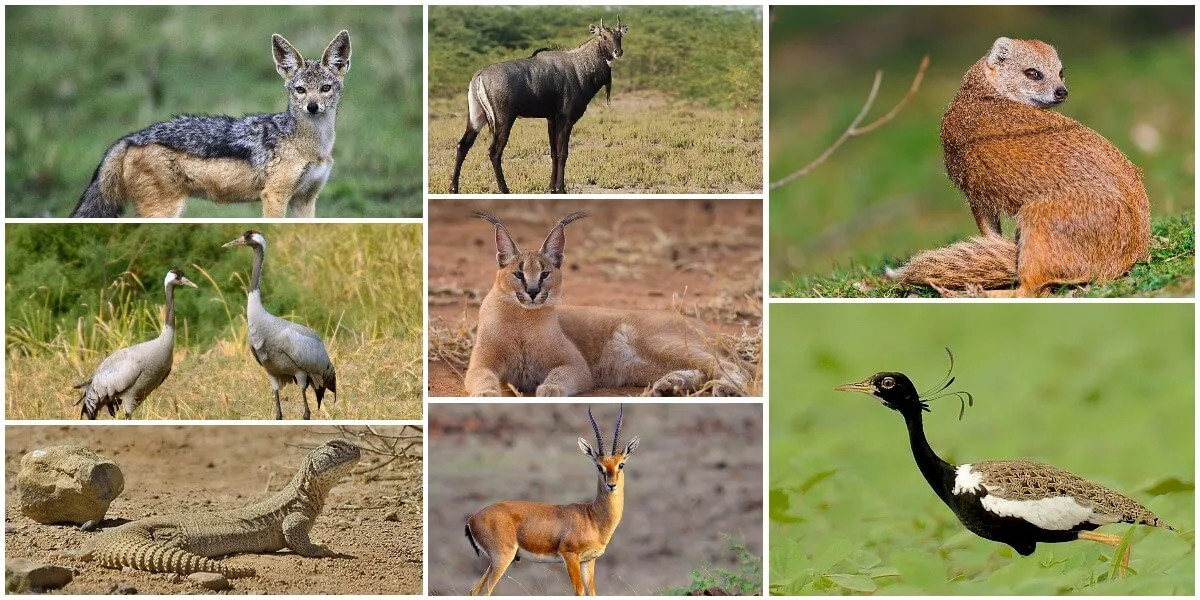
Located near Jakhau village in Abdasa Taluka, the sanctuary sits in the arid grasslands of western Kutch. Beyond the Bustard, the reserve shelters an impressive range of wildlife — from rare mammals like Caracal and Wolf to dozens of migratory bird species that arrive each winter from Central Asia.
Distance from Bhuj
~110 km (2 hrs)
Best Season
November – March
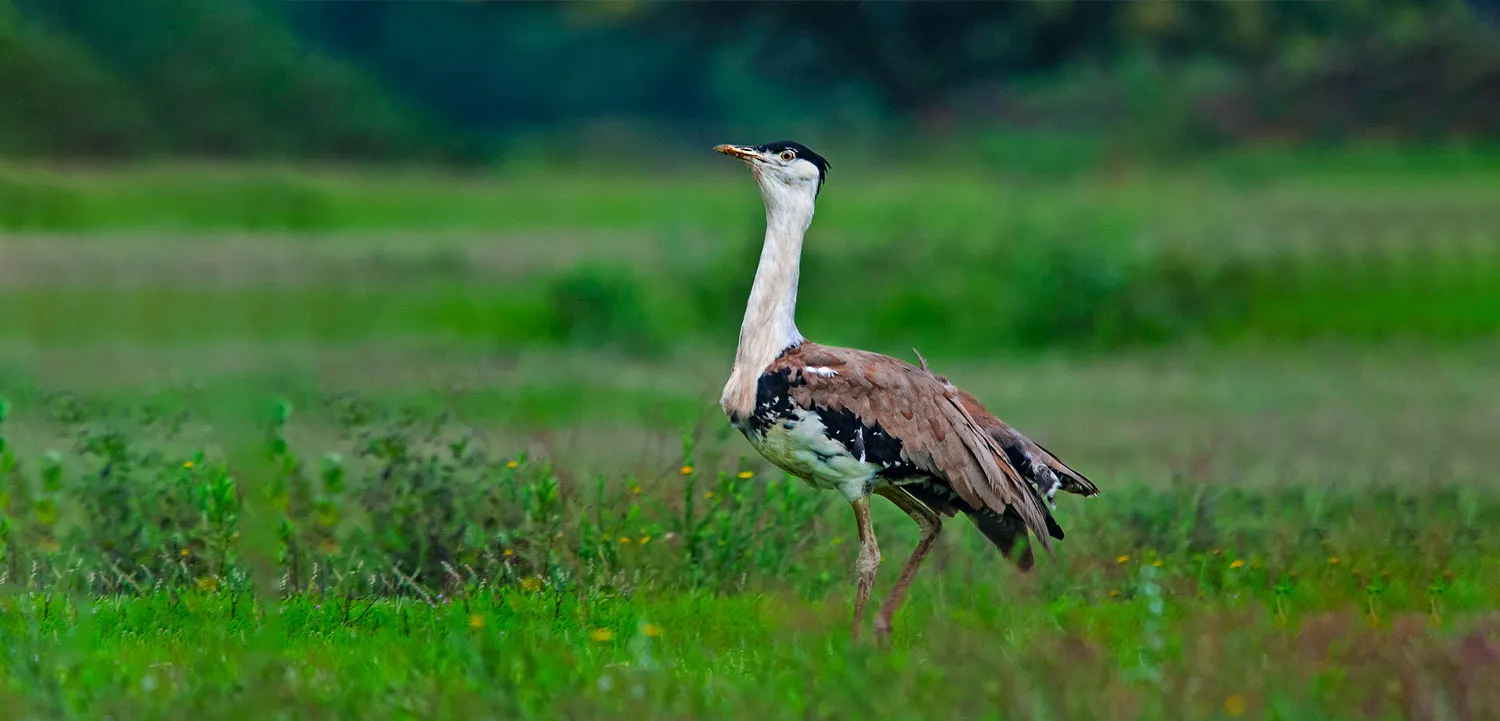
Protected Grassland
Home to one of the world's rarest birds in one of India's smallest sanctuaries
Wildlife & Birds
Birds
Mammals
Planning Your Visit
Getting There
~110 km from Bhuj via Nalia (20 km from the sanctuary). Drive through Abdasa Taluka — a scenic route through open Kutch countryside. No public transport; private or hired vehicle required.
Entry & Timings
Open 7:00 AM – 6:00 PM. Entry: ₹50 adults, ₹25 children, ₹30 parking. Fees may change — confirm locally before visiting.
Best Time
November to March for maximum winter bird diversity. Early morning (7–10 AM) is best for Bustard activity before the heat sets in.
What to Bring
Binoculars, telephoto lens, water, sun protection. No food stalls inside — carry your own provisions.
Visitor Tips
Best Time by Season
November – February
Peak season. Winter migrants arrive, the Bustard is most active, and cool mornings make long visits comfortable.
Late Monsoon (September – October)
Grassland is green and lush. Good for Lesser Florican and early migrants. Hot but rewarding for photographers.
March – June
Very hot and dry. Fewer species. Not recommended unless you have a specific research purpose.
Gallery
Grassland, wildlife, and rare birds from Kutch's most significant conservation sanctuary.
Open arid grassland — the Bustard's preferred terrain
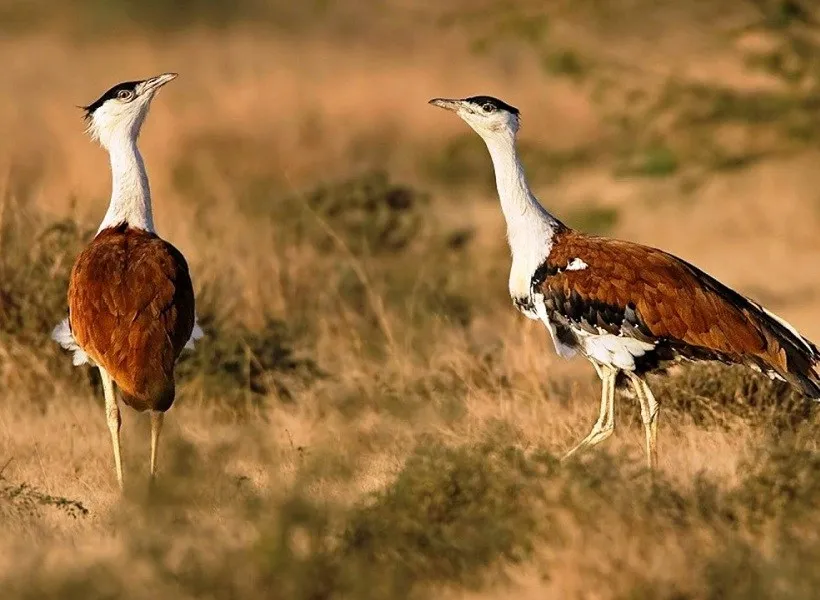
The Great Indian Bustard — one of the world's most endangered birds
Wildlife diversity beyond birds — nilgai, chinkara and more
Nearby Places
Pair the sanctuary with other western Kutch highlights for a full day trip from Bhuj.